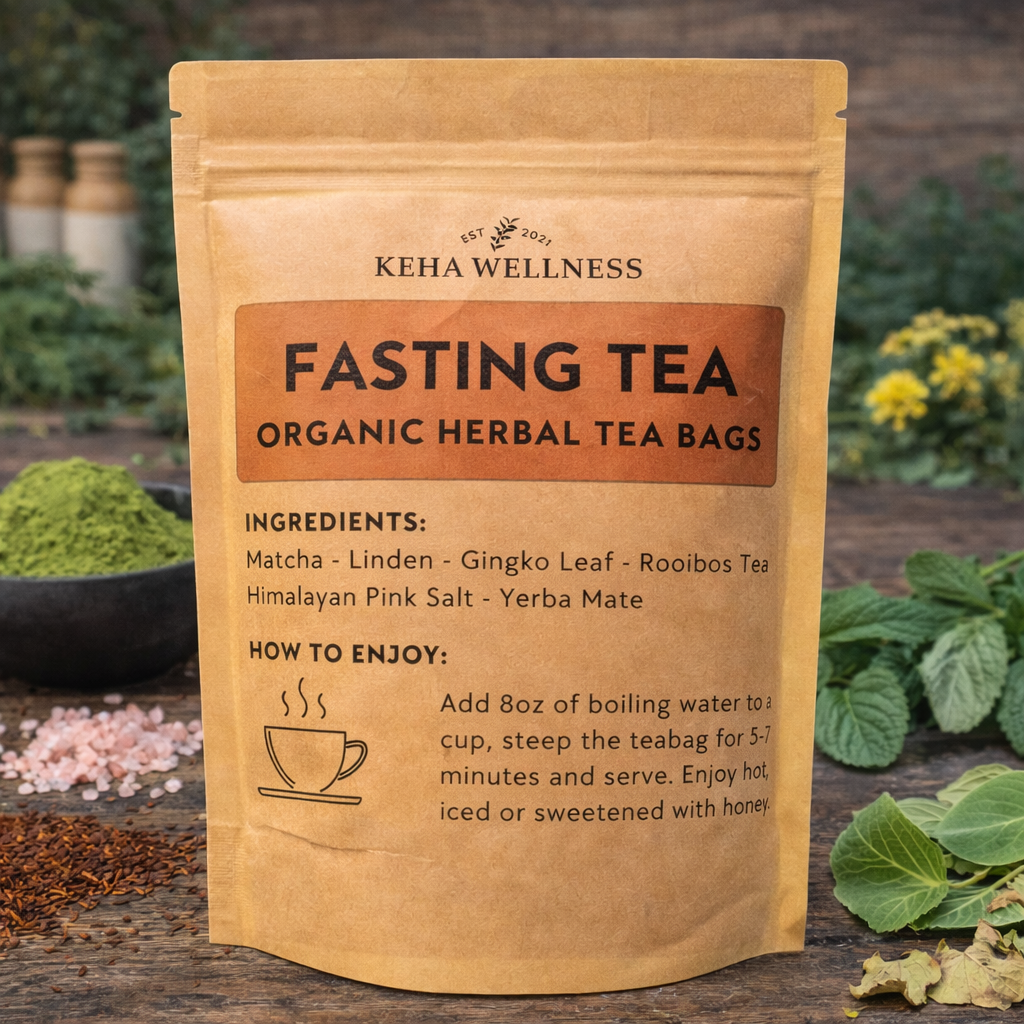
Fasting Tea: A Herbalist’s Guide to Supporting Your Fast Naturally
Share This Article
Can You Drink Tea While Fasting?
Yes — and if you're serious about intermittent fasting, you probably should.
Plain, unsweetened herbal tea is one of the most effective tools for staying consistent during a fasting window. It hydrates your body, creates a comforting ritual in place of food, and — with the right herbs — supports your energy and focus right when you need it most.
This guide covers everything you need to know about drinking tea while fasting, which herbs work best, and how Keha Wellness Fasting Tea was formulated to support your routine from the inside out.
Why Tea and Fasting Go Together
Fasting traditions around the world have long included herbal teas and warm infusions — and for good reason.
Buddhist monks have used matcha and green tea to maintain alertness during morning fasts for centuries. Herbal infusions were standard practice before meals across Europe. In South America, yerba mate became a daily ritual tied to sustained energy and mental clarity.
Tea works during a fast because it does something food usually does: it gives your body warmth, your mind a ritual, and your hands something to hold. That sensory experience matters more than most people realize when hunger hits.
A quality fasting tea:
- Keeps you hydrated during long fasting windows
- Helps quiet hunger signals so you stay on track
- Replaces the comfort routine that meals typically provide
- Supports focus and steady energy without breaking your fast
What Breaks a Fast?
For intermittent fasting purposes, the general rule is simple: calories break a fast, plain tea does not.
Safe to drink during a fasting window:
- Plain herbal tea (unsweetened)
- Rooibos tea with no additives
- Matcha with no additives
- Water
Will break a fast:
- Tea with sugar, honey, or syrups
- Tea with milk, cream, or creamers
- Any sweetened or flavored tea drinks
If you're following a water-only fast for medical or religious purposes, only water counts. For the vast majority of intermittent fasters, plain herbal tea is fair game — and genuinely helpful.
Keha Wellness Fasting Tea: Ingredients and Why They Matter
Our Fasting Tea was crafted using herbs with a long history of traditional use during fasting windows. Here's what's inside and why each ingredient earned its place.
Matcha
Matcha is stone-ground Japanese green tea — one of the most revered herbs in fasting traditions worldwide. Unlike steeped green tea, matcha delivers the full spectrum of the leaf's natural compounds, including L-theanine for calm focus and natural caffeine for sustained alertness. It's been central to Zen Buddhist fasting and meditation practices for hundreds of years.
Yerba Mate
Used across South America as a daily vitality drink for generations, yerba mate is prized for the steady, sustained energy it provides. Many people who fast find it easier to reach the midday hours with yerba mate as part of their morning routine.
Linden
Linden flower has been used in European herbal traditions for centuries, particularly valued for its calming and soothing properties. During a fast, when stress and irritability can creep in alongside hunger, linden helps keep the nervous system settled and the mind clear.
Ginkgo
One of the oldest living tree species on Earth, ginkgo has a long history in traditional wellness systems for supporting mental clarity and cognitive function. It's a natural fit in a fasting blend, where sustained focus is often the biggest challenge.
Rooibos
Naturally caffeine-free and rich in antioxidants, rooibos adds a warm, smooth body to this blend while making it balanced for sensitive individuals. It has deep roots in South African wellness traditions and is one of the most gentle, nourishing herbs you can drink during a fasting window.
Himalayan Pink Salt
A thoughtful and functional addition. During extended fasting windows, electrolyte balance matters. A trace of Himalayan pink salt provides naturally occurring minerals that support hydration at the cellular level — one of the small details that separates a purposefully formulated fasting tea from a generic herbal blend.
What Does Keha Wellness Fasting Tea Taste Like?
Smooth, earthy, and grounding — with a clean finish.
The matcha brings a rich, vegetal depth that's softened by the natural sweetness of rooibos. Linden adds a gentle floral note, while the yerba mate contributes a light, grassy energy underneath it all. The Himalayan pink salt rounds out the flavors in the way salt does — not by tasting salty, but by making everything else taste more complete.
It's a sophisticated cup. Purposeful and calming at the same time.
How to Brew Fasting Tea for Best Results
What you need: 1 Keha Wellness Fasting Tea bag, hot (not boiling) water, a mug
Steps:
- Place one tea bag in your mug
- Pour hot water over the bag — aim for just off the boil, around 175–185°F (matcha and delicate herbs benefit from slightly cooler water)
- Steep for 4 to 6 minutes
- Remove the bag and drink plain — no sweeteners, no milk
- Enjoy during your fasting window
Herbalist tip: Brew your first cup at the exact time you'd normally sit down for breakfast. Replacing that moment with a deliberate tea ritual is one of the most effective mental strategies for extending a fast comfortably.
When to Drink Fasting Tea
First thing in the morning: Helps bridge the gap between waking up and your eating window opening. This is when most people feel the pull to break their fast early.
Mid-morning (around 10–11am): Hunger often peaks in this window. A second cup supports focus and gives you something satisfying without ending your fast.
Before your eating window opens: Use tea to arrive at your first meal calm and intentional rather than ravenous and reactive. It makes a real difference in how and what you eat.
Why Choose Keha Wellness?
We're a small-batch herbal apothecary based in South Florida. We don't chase trends or fill products with fillers — we hand-blend quality herbs with the same care a traditional herbalist would.
What sets our Fasting Tea apart:
- Small-batch crafted — not mass produced
- Real, quality herbs — the kind that actually show up in your cup
- Microplastic-free tea bags — important for a product used daily in hot water
- No bleach-treated bags — another detail most brands skip
- Built for real daily use — not a novelty product, a practical tool
Who Should Speak With a Doctor Before Use
While fasting tea is generally well-tolerated, please consult your healthcare provider if you are:
- Pregnant or nursing
- Sensitive to caffeine
- Managing blood sugar levels
- Currently taking prescription medications
- New to fasting practices
Frequently Asked Questions
Does fasting tea break a fast? No — plain, unsweetened herbal tea does not break an intermittent fast. Adding sugar, honey, or milk will.
Is rooibos tea good for fasting? Yes — rooibos is naturally caffeine-free, gentle on the stomach, and rich in antioxidants, making it one of the best base ingredients in a fasting blend.
Does matcha break a fast? Plain matcha with no added milk or sweetener does not break an intermittent fast. It's one of the most popular fasting-friendly drinks for a reason.
When is the best time to drink fasting tea? Morning and mid-morning are the most effective windows — when hunger is highest and the need for focus is greatest.
How much fasting tea can I drink per day? Most people drink 1 to 3 cups during their fasting window. Because this blend contains natural caffeine from matcha and yerba mate, be mindful of your personal tolerance.
Is Keha Wellness Fasting Tea available loose leaf? Yes — it's available in both tea bags and loose leaf.
These statements have not been evaluated by the Food and Drug Administration. This product is not intended to diagnose, treat, cure, or prevent any disease. Consult your healthcare provider before use if you are pregnant, nursing, or taking medication.