Senna, Triphala, and Psyllium Tea: A Traditional Herbalist's Guide to Colon Care Tea Benefits
Share This Article
Some conversations don't make it onto polite Instagram captions. Regularity, comfort, and a body that flows the way it's supposed to — these are everyday wellness questions, and yet most of us don't talk about them. Herbalists do, though. They always have. For thousands of years, traditional medicine systems from India to the Mediterranean have built blends specifically for keeping the body's natural rhythm flowing comfortably.
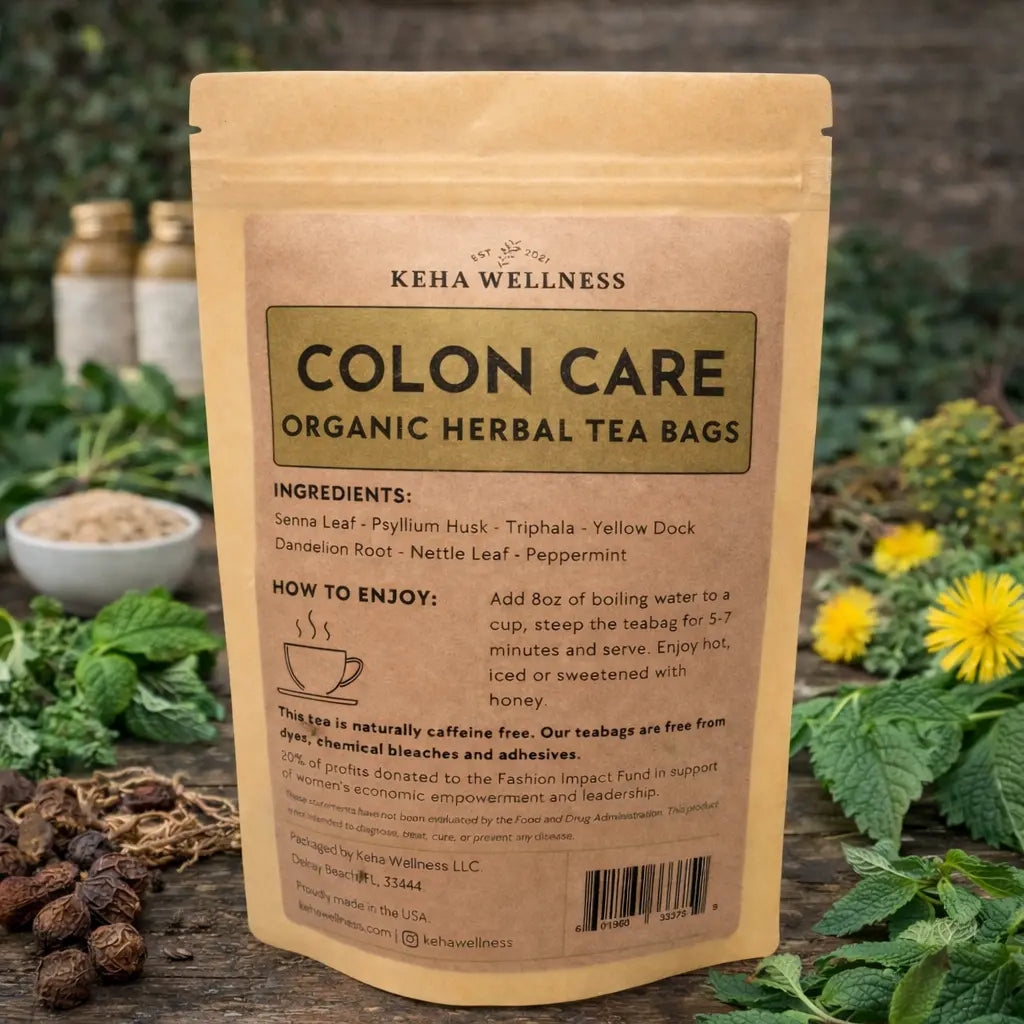
Our Colon Care Tea is built around three of the most-trusted traditional herbs in this category: senna leaf, triphala (an Ayurvedic three-fruit blend), and psyllium husk. Together, they represent thousands of years of refined herbal wisdom on supporting a comfortable, gentle rhythm.
In this guide, we'll walk through what these herbs are, how they've been used traditionally, and how to use a colon care tea responsibly — because this is one blend that requires more care and intention than your typical evening cup.
What You'll Learn in This Guide
• Why is senna leaf the classic Western herbalist's regularity herb
• What triphala is and why Ayurvedic herbalism has used it for over 3,000 years
• How psyllium husk supports a comfortable, hydrated rhythm
• How to use a colon care tea responsibly (this is important)
• Who should NOT use this blend
• How to incorporate this tea as a periodic, not daily, ritual
Senna Leaf: The Classic Western Regularity Herb
Senna (Cassia senna) is a flowering plant native to North Africa and the Arabian Peninsula. Its leaves and pods have been used for over 1,000 years in Arabic, Egyptian, and Mediterranean herbalism specifically for supporting the body's natural rhythm. It's one of the most well-documented traditional regularity herbs in the world, and remains widely used in modern herbalism today.
Senna is what herbalists call a stimulant herb — it's powerful, it works quickly, and it's intended for short-term, occasional use rather than daily long-term consumption.
Traditionally, senna leaf has been enjoyed to support:
• A comfortable, regular, natural rhythm
• The body's periodic gentle cleansing process
• A sense of digestive ease and lightness
Triphala: The 3,000-Year-Old Ayurvedic Trio
Triphala (Sanskrit for three fruits) is one of the most respected formulas in all of Ayurveda — the 3,000+ year-old traditional medicine system of India. It combines three small, sour-tart fruits: amalaki (Indian gooseberry), bibhitaki, and haritaki. Each fruit is associated with one of the three Ayurvedic doshas, making the formula traditionally balanced for nearly any constitution.
Where senna is sharp and immediate, triphala is gentle and tonic — the kind of formula Ayurvedic practitioners have recommended for daily long-term use over centuries, specifically for supporting comfortable digestion, gentle cleansing, and a balanced rhythm.
Traditionally, triphala has been enjoyed to support:
• A balanced, comfortable digestive rhythm
• The body's natural cleansing rhythm
• Comfortable everyday digestive ease
• A grounding, balancing daily ritual
Psyllium Husk: The Hydrating Fiber
Psyllium husk comes from the seeds of Plantago ovata, a flowering plant native to India and the Middle East. The husk is exceptionally rich in soluble fibre — it forms a hydrating gel when it meets water, which is exactly what makes it so valued in both traditional and modern wellness.
Important note: psyllium needs water. A lot of it. Always drink a full glass of water with any psyllium-containing tea, plus additional water throughout the day.
Traditionally, psyllium husk has been enjoyed to support:
• Comfortable, hydrated rhythm
• A settled, full feeling
• The body's natural movement and balance
How to Use Colon Care Tea Responsibly
This is the most important section in this guide. Senna-containing teas are strong and meant for periodic, short-term use, not for daily long-term drinking. Here's the responsible pattern:
1. Drink 1 cup in the evening (typically 30–60 minutes after dinner).
2. Stay close to home for the next 8–12 hours, particularly the morning after. Senna typically works during this window.
3. Drink plenty of additional water — at least 2–3 extra glasses on the day you drink this tea.
4. Use it for short windows: 1–2 cups in a single week, then a break of at least 1–2 weeks before using again.
5. Do not drink this tea daily for extended periods. Long-term daily senna use can affect the body's natural rhythm and electrolyte balance.
6. If you're using this tea for the first time, start with a half-strength brew (steep half the time, or use half a tea bag) to see how your body responds.
How to Brew (The Right Way)
7. Use 1 tea bag (or 1 heaping teaspoon of loose leaf) per 10–12 oz cup.
8. Heat water to just-off-boil (around 200°F).
9. Steep for 5–7 minutes.
10. Drink with an additional full glass of plain water.
11. Drink in the evening, after dinner, with no plans to leave the house the next morning.
Who Should NOT Use This Blend
This blend is not appropriate for several groups:
Pregnant or nursing individuals: Senna is not recommended during pregnancy or nursing.
Children under 12: Not recommended.
People with chronic digestive conditions: If you have IBS, IBD, Crohn's, ulcerative colitis, diverticulitis, or any chronic gut condition, do not use this blend without first consulting your healthcare provider.
People with electrolyte imbalances or kidney disease: Senna can affect potassium balance.
Anyone taking medications: Senna can affect the absorption of oral medications. Drink colon care tea at least 2–4 hours away from any medication, and consult your healthcare provider.
Anyone experiencing prolonged digestive changes: Persistent constipation, diarrhoea, blood in the stool, or unexplained weight loss should always be evaluated by a healthcare professional, not addressed with herbal tea.
How to Use This Tea as a Periodic Ritual
Many people use a colon care tea seasonally or after periods of heavier eating — never as a daily drink:
Post-holiday reset. A single cup after a heavier holiday or vacation, with plenty of water.
Quarterly refresh. Once a season, a 1–2 cup short window.
Pre-travel ritual. Some people use a single cup the night before a long trip, when they want to feel light heading into transit.
This is a tool, not a daily ritual. Treat it that way and it works beautifully.
Why We Built This Blend
Keha Wellness was founded on a simple idea: the herbal apothecary tradition is too valuable to lose. We hand-blend every batch in small quantities from our base in South Florida, sourcing organic herbs from farms we trust. Our Colon Care Tea is built from three traditions — Western, Ayurvedic, and the long history of psyllium use — with intentional sourcing and a focus on responsible, periodic use.
Available in 15-count biodegradable tea bags or as loose leaf for those who prefer a more ritual brewing experience.
Frequently Asked Questions
How often should I drink colon care tea?
Periodically, not daily. Common patterns are once a week at most, or as a 1–3 day periodic ritual every 2–3 months. Long-term daily senna use is not recommended.
How quickly does it work?
Senna typically works within 6–12 hours, which is why most traditional uses recommend drinking it in the evening.
What does Colon Care tea taste like?
Earthy and slightly bitter from the senna and triphala, balanced by the hydrating texture of psyllium. Most people find it perfectly drinkable, particularly with a small amount of warm lemon water on the side.
Is this tea caffeine-free?
Yes, completely caffeine-free.
Can I take this tea while travelling?
We don't recommend it for the day of travel. Senna typically works during the 8–12 hours after drinking, which doesn't pair well with airports, transit, or activities away from a familiar bathroom.
Ready to Try It?
Our Colon Care Tea is available now in biodegradable tea bags. Hand-blended in South Florida from organic ingredients, it ships free on orders over $30.
These statements have not been evaluated by the Food and Drug Administration. This product is not intended to diagnose, treat, cure, or prevent any disease. Consult your healthcare provider before use, especially if pregnant, nursing, or taking medication.